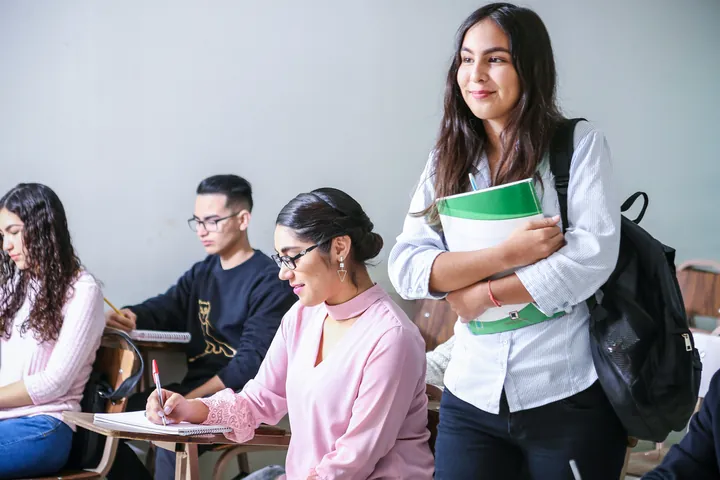
A Comparative View of Post-Secondary First-Year Student Transition Programming
While the Canadian student-affairs community has man great examples of first-year student transition programming at both the college and university levels, looking at the experiences of post-secondary educational institutions in other cultural and national contexts can inform an understanding of what is possible to support first-year student success at postsecondary institutions.


The FYE Experience Beyond North America
The global educational landscape has been profoundly shaped by various philosophical traditions, among which the Confucian and Socratic models stand out, due to their historical depth and enduring influence. These models adopted by higher educational institutions (HEI) originate from distinct cultural and philosophical backgrounds, and offer contrasting approaches to learning, teaching, and the purpose of education. In recent years, a hybrid model that integrates elements of both Confucian and Socratic philosophies has emerged, reflecting a trend toward educational systems that are more adaptable, inclusive, and capable of preparing students for the complexities of the modern world. The Confucian educational model is rooted in the teachings of Confucius (551–479 BCE), a Chinese philosopher whose ideas have influenced East Asian societies.
This model emphasizes moral development, respect for authority and hierarchy, and the importance of hard work and perseverance in achieving educational success. Education is seen not merely as a means to personal advancement, but as a way to cultivate virtue and contribute to societal harmony.
The Confucian approach values wrote memorization and rigorous examination systems, which are believed to instill discipline and a deep understanding of classical texts and moral principles (Deng, 2011). In contrast to the Confucian emphasis on memorization and moral education, the Socratic model, named after the Greek philosopher Socrates (470–399 BCE), prioritizes critical thinking, questioning, and dialogue. The Socratic method asks questions to challenge assumptions and encourage thorough reflection on complex issues. This model values the development of independent thought, ethical reasoning, and the pursuit of knowledge for its own sake. In the Socratic view, education is a lifelong quest for wisdom and virtue facilitated by dialogue and the open exchange of ideas (Noman et al., 2023). As a newer approach, the hybrid model of education seeks to integrate the strengths of both Confucian and Socratic philosophies, creating an approach that values both the acquisition of knowledge and the development of critical-thinking skills. This model values the Confucian emphasis on hard work, discipline, and moral education while also incorporating the Socratic principles of inquiry, dialogue, and the cultivation of independent thought.
FYE in Confucian Models of East Asia
The first-year experience in higher education across East Asia, particularly in China, Japan, and South Korea, reflects a dynamic and innovative response to the challenges and opportunities of rapid expansion and the increasing demand for quality education. While rooted in distinct cultural and educational traditions, these countries share a common commitment to enhancing the transition of new students into higher educational environments. This commitment is manifested through various programs and initiatives designed to support students academically, socially, and psychologically during their critical first year of post-secondary studies.
Read the full documentOpen PDF
About the author
Keith J. Connell, MBA, PhD (c)
Keith J. Connell, MBA, is a senior marketing leader, corporate trainer and professor in Barrie, Ontario with 30+ years in brand strategy, digital marketing, learning and development, and higher education.
More about Keith